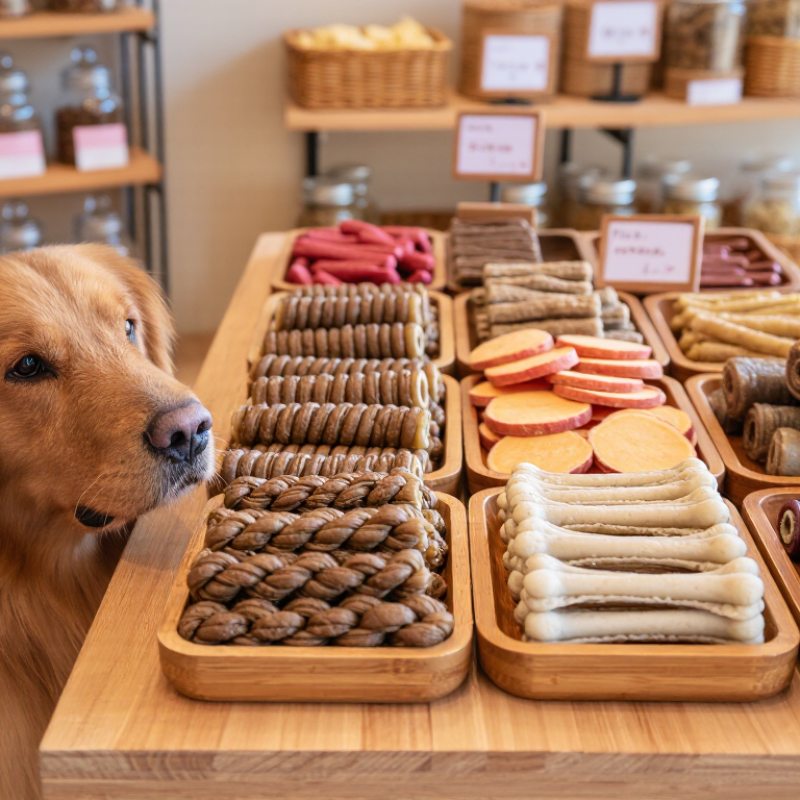
Natural dog chews are edible products made mainly from identifiable animal or plant ingredients, with limited processing. Common examples include dried skin, tendons, tracheas, collagen-rich tissues, and vegetable-based alternatives. A typical process involves sourcing, trimming, washing, heat treatment, drying, and sealed packaging. Air-drying removes moisture slowly, while controlled heating can reduce microbial risks. The exact process matters.
The word “natural” can mislead. The Association of American Feed Control Officials describes natural feed ingredients as coming from plant, animal, or mineral sources, with limited chemically synthetic processing. Vitamins and minerals may still be permitted under that definition. Therefore, buyers should review ingredient lists, country of origin, batch details, and testing records. Natural is not a safety guarantee.
Market demand is substantial. The American Pet Products Association estimated 65.1 million U.S. households owned a dog in 2023–2024. Its 2024 State of the Industry report also valued U.S. pet industry spending at $147 billion in 2023. These figures show commercial potential, but quality controls remain essential. Suppliers should monitor moisture activity, foreign materials, Salmonella risk, and storage conditions. Clear traceability helps retailers respond quickly if a lot fails inspection. Small details matter.
I would question any chew that promises too much. A stronger product story combines simple ingredients, documented processing, and realistic feeding guidance. Some chews can splinter, cause choking, or upset digestion. Staff training should reflect those limits. Consumers deserve useful facts, not polished assumptions.