
Global buyers are increasingly choosing Freeze-Dried Strawberries for their long shelf life, bright color, and convenient handling. These berries feel light in the hand, yet they retain a sharp strawberry aroma and a crisp texture. A small pouch can travel across continents without refrigeration. That matters to food manufacturers, retailers, outdoor brands, and consumers seeking dependable ingredients.
Food scientist Dr. Kantha Shelke explains, “Freeze-drying removes moisture while preserving much of the food’s original flavor, color, and structure.” Her observation reflects the process clearly. Producers first freeze ripe strawberries, then reduce pressure to remove ice as vapor. This protects many desirable qualities better than ordinary hot-air drying. Still, results depend on fruit maturity, processing controls, packaging, and storage conditions.
The appeal is practical. Freeze-Dried Strawberries can be added to breakfast cereals, chocolate, bakery fillings, snack mixes, and powdered beverages. They also provide visual value: red pieces remain recognizable instead of becoming dark, sticky fragments. Buyers can estimate portions more easily because the product is lightweight and stable. Less waste helps, too.
But the choice is not perfect. Freeze-dried fruit can break during transport, absorb humidity quickly, and cost more than conventional dried fruit. Some buyers may also dislike its fragile crunch. These limitations deserve honest attention. Reliable suppliers therefore need documented quality testing, moisture-resistant packaging, traceable sourcing, and clear storage guidance. Global demand is growing, but trust remains the real product.
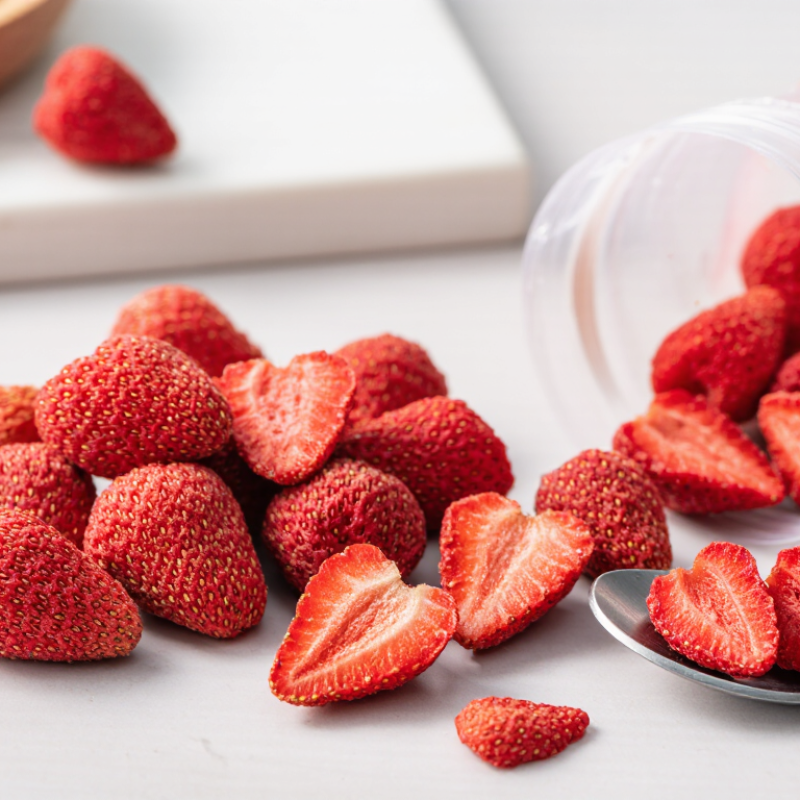
Freeze-dried strawberries are fresh strawberries transformed through freezing and vacuum drying. The process removes water as ice vapor, rather than melting it first. This helps preserve much of the fruit’s shape, color, aroma, and natural sweetness.
The result is light, crisp, and surprisingly fragile. A whole berry may feel airy when broken between your fingers. Its flavor becomes more concentrated because most water has gone. Unlike ordinary dried fruit, freeze-dried strawberries usually have a crunchy texture.
They soften quickly in yogurt, milk, or humid air. That change is useful in cereal, baking, snack mixes, and dessert decoration.
Quality depends on more than appearance.
Sound fruit, controlled freezing, low residual moisture, and sealed packaging all matter. In practical handling, a torn pouch can ruin crispness within hours. That detail is easy to overlook. The berries may still look acceptable, yet taste chewy instead of crisp.
They also are not identical to fresh strawberries. Their texture can feel brittle, and some pieces may contain seeds or uneven color. This is not necessarily a defect. It often reflects natural fruit variation and processing conditions.
Buyers should check ingredient lists and storage instructions, especially when choosing products for export or commercial use. Temperature, humidity, transport time, and packaging quality can change the eating experience before the berries reach the customer.
Freeze-drying begins with clean, ripe strawberries. USDA FoodData Central reports that raw strawberries contain about 90.95 grams of water per 100 grams. That moisture must leave without melting the fruit. The berries are sliced, spread on trays, and rapidly frozen, often below -30°C. Their cellular structure becomes a network of ice crystals. Careful freezing matters. Large crystals can damage texture.
Inside a vacuum chamber, pressure drops sharply. Gentle heat then changes ice directly into vapor through sublimation. Liquid water is skipped. This is the process’s defining feature. Primary drying removes most ice, while secondary drying removes tightly bound moisture. Sensors track product temperature, chamber pressure, and endpoint moisture. The International Freeze-Drying Association describes this staged control as essential for stable, lightweight foods. It also explains why strawberries keep their porous, crisp structure.
A final product should have very low water activity, commonly near or below 0.60 for shelf-stable dried foods, according to food-safety guidance from the U.S. Food and Drug Administration. Packaging must still block oxygen and humidity. Otherwise, the pieces soften quickly. Nutrients and color can be retained better than with some high-heat methods, but freeze-drying is not perfect. Some aroma compounds fade. Vitamin loss can occur during cutting, storage, or oxygen exposure. The best process is controlled, not magical.
| Data Dimension | Typical Value or Process Detail | Why It Matters to Global Buyers |
|---|---|---|
| Fresh Strawberry Water Content | Approximately 90%–92% by weight | Explains why removing water greatly reduces shipping weight and improves storage stability. |
| Pre-Freezing Temperature | Typically about −30°C to −40°C before vacuum drying | Rapid freezing helps form smaller ice crystals, which can better preserve the fruit structure. |
| Primary Drying: Sublimation | Ice changes directly from solid to vapor under vacuum; chamber pressure is commonly around 0.05–0.2 mbar. | Removes frozen water without melting the ice, helping retain shape, color, aroma, and porous texture. |
| Secondary Drying | Controlled warming under vacuum removes moisture that remains bound to the fruit. | Supports a low final moisture level and reduces the risk of quality deterioration during storage. |
| Final Moisture Content | Commonly about 1%–4%, depending on the product specification | Low moisture improves crispness and helps limit microbial and chemical deterioration. |
| Water Activity | Often targeted below 0.30 for a crisp, shelf-stable product | Water activity is more useful than moisture alone for evaluating microbial stability and crispness. |
| Typical Fresh-to-Dried Mass Ratio | Approximately 8:1 to 12:1, depending on variety, ripeness, and final moisture | Creates a lightweight ingredient with concentrated flavor and lower logistics costs per serving. |
| Texture | Light, porous, and crisp when adequately dried and protected from humidity | Provides an appealing snack texture and can be milled into powders or inclusions. |
| Flavor and Aroma | Typically stronger by weight because most water has been removed without high-temperature frying. | Suitable for cereals, bakery products, confectionery, dairy applications, beverages, and snack mixes. |
| Color Retention | Generally retains a bright red to pink appearance when raw material and processing are well controlled. | Improves visual appeal and provides a natural fruit color without deep-frying. |
| Nutritional Characteristics | No frying oil is required; nutrients are generally better protected than with many high-temperature drying methods, although some losses can still occur. | Supports clean-label, fruit-based product positioning while keeping the ingredient convenient. |
| Rehydration Behavior | The porous structure allows relatively rapid absorption of water, although the original fresh texture is not fully restored. | Makes the product useful in instant foods, toppings, dessert preparations, and ingredient blends. |
| Packaging Requirement | Moisture- and oxygen-barrier packaging is normally used; an oxygen absorber may be included when appropriate. | Protects crispness, color, flavor, and nutritional quality during international transport and storage. |
| Typical Shelf-Life Range | Often about 12–24 months in sealed, suitable packaging; the exact period depends on moisture, oxygen, light, and storage conditions. | Provides a longer commercial distribution window than fresh strawberries. |
| Storage Conditions | Store sealed in a cool, dry, dark environment and reseal promptly after opening. | Reduces moisture uptake, softening, oxidation, and quality loss. |
| Main Buyer Advantages | Longer shelf life, lower weight, concentrated fruit flavor, attractive appearance, and versatile formats. | Meets the needs of global buyers seeking convenient, stable, lightweight, and minimally processed fruit ingredients. |
Note: The values shown are typical industry ranges. Actual results vary according to strawberry variety, maturity, slice size, equipment, process settings, packaging, and storage conditions.
Global buyers choose freeze dried strawberries because they combine familiar flavor with practical performance. In my experience, the first attraction is their crisp texture and bright red appearance. These qualities remain useful in cereals, snack mixes, bakery fillings, desserts, and beverage powders. The fruit feels premium, yet it is easier to handle than fresh berries.
Convenience matters across international supply chains. Freeze drying removes most moisture while preserving much of the strawberry’s aroma, color, and shape. The lighter product can reduce shipping weight and simplify storage. Buyers also value consistent portioning and year-round availability. Proper moisture-barrier packaging helps protect the berries during long transport. However, quality still depends on careful harvesting, processing, and storage. Not every batch performs equally.
Reliable buyers look beyond appearance. They often request ingredient specifications, microbiological test reports, moisture data, allergen statements, and traceability records. Clear documentation builds confidence between suppliers and importers. The ingredient is usually simple: strawberries, without unnecessary additives. That simplicity supports clean-label product development. Still, freeze dried fruit is fragile. Rough handling can create powder and reduce visual appeal. It may also absorb humidity quickly after opening. Buyers need realistic guidance, not exaggerated promises. Cost remains another concern, since freeze drying uses substantial energy and suitable packaging. Even so, the combination of convenience, recognizable flavor, and dependable use keeps attracting global food manufacturers.
Global buyers choose freeze-dried strawberries when quality remains stable across long shipping routes.
Color, aroma, texture, and water activity strongly influence purchasing decisions. Procurement teams often inspect batch records, laboratory results, and sample consistency before approving supply.
A crisp bite matters. Soft pieces may suggest moisture exposure or weak packaging.
Shelf life also affects demand, especially for importers managing warehouses and seasonal sales. Proper freeze-drying removes moisture while protecting much of the fruit’s recognizable flavor and structure.
However, the result depends on processing accuracy, oxygen control, and storage conditions. High-barrier packaging can reduce moisture and oxidation risks. Clear lot codes and tested shelf-life data make buyers more confident. A long date alone proves little.
Tips:
Check water activity, seal strength, and sensory quality before large purchases. Store cartons in a cool, dry area away from sunlight. Review testing methods, not just headline claims. In practice, small differences between batches can affect customer acceptance. It is easy to overlook them. One weakness remains: shelf-life estimates may change after repeated opening, humid transport, or poor warehouse handling. Buyers who monitor these details usually protect quality more effectively.
Global buyers choose freeze-dried strawberries because several industries need fruit with stable quality, low moisture, and easy transport. The food manufacturing sector uses them in cereal, granola, chocolate, bakery fillings, and snack mixes. Their crisp texture adds visible fruit pieces without refrigeration. This matters in export supply chains.
The bakery and dessert industries purchase them for toppings, fillings, powdered flavoring, and decorative inclusions. Beverage companies also use strawberry pieces in tea blends, smoothie powders, and instant drink products. According to Grand View Research’s 2024 analysis, the global freeze-dried food market was valued at approximately USD 2.7 billion in 2023. The report also expects continued growth through 2030, supported by convenient food demand. These figures include many products, not strawberries alone.
Nutraceutical and meal-replacement manufacturers value their light weight and concentrated flavor. Outdoor food producers use them in lightweight meals, where every gram affects transport costs. Retailers sell them as clean-label snacks, especially when the ingredient list stays short. However, quality is not automatic. Color can fade, pieces can break, and moisture quickly damages the texture after opening. Buyers should inspect water activity, microbiological results, packaging barriers, and batch records. Reports from MarketsandMarkets also identify shelf stability and convenience as major freeze-dried food growth factors. Still, market forecasts differ. They are useful signals, not guarantees.