Top Barista Instant Coffee Suppliers for Wholesale Buyers?

For wholesale buyers, choosing a Barista Instant Coffee supplier means balancing café-style taste with dependable volume, clear specifications, and practical costs. Demand offers a useful backdrop. The National Coffee Association’s 2024 National Coffee Data Trends report found that 67% of U.S. adults had coffee in the past day, while 45% had specialty coffee. These figures describe U.S. consumers, not instant coffee demand specifically. Still, they show why buyers may seek convenient coffee with a more considered flavor profile.

A reliable supplier should explain how its coffee is made, provide ingredient and allergen information, and share consistent product specifications. Ask for samples before ordering. Test each one in the drinks your customers actually buy, including milk-based recipes and iced beverages. Check aroma, solubility, aftertaste, and performance across batches. Small details matter. A powder that dissolves poorly can leave grit at the bottom of a cup.

Price is only part of the decision. Compare minimum order quantities, packaging options, shelf life, lead times, and documentation. Request relevant quality certifications, then verify their scope and validity rather than relying on a logo alone. The ICO’s Coffee Market Report provides broader context on global coffee production and consumption, but it cannot predict a supplier’s consistency. That takes direct checks. And a sample is not a guarantee. This guide introduces supplier-selection criteria and questions wholesale buyers can use to assess Barista Instant Coffee offers with more confidence.
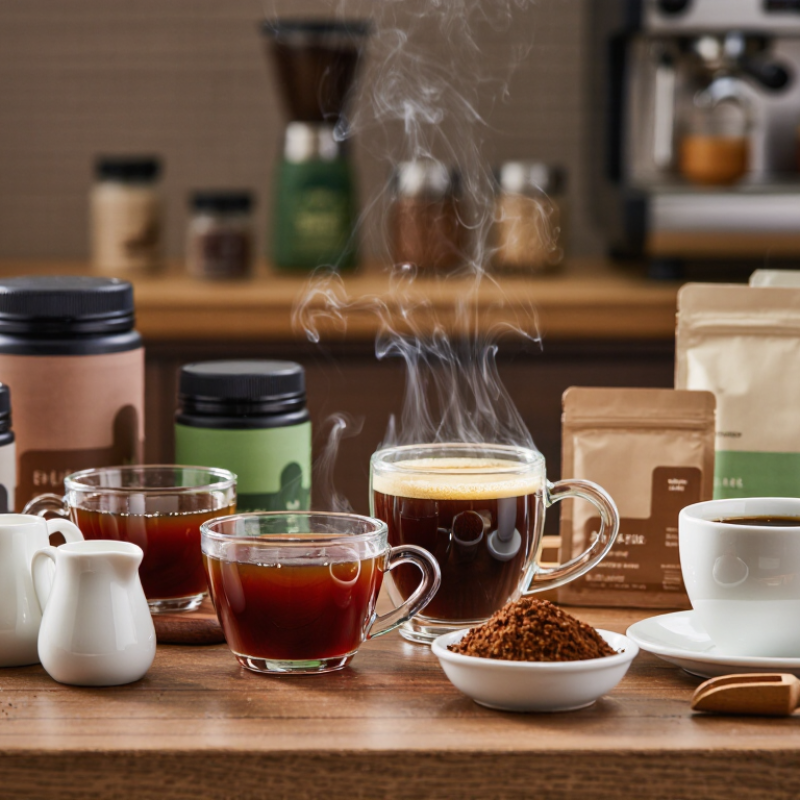
Top Barista Instant Coffee Suppliers for Wholesale Buyers?

Define Barista-Grade Instant Coffee by Format, Solubility, and ISO 3720

For wholesale buyers, “barista-grade” instant coffee should describe measurable performance, not just a premium-sounding label. Formats behave differently: spray-dried powder dissolves quickly, while agglomerated granules are easier to dose. Freeze-dried crystals often look more defined in a clear jar. Test each sample in hot water and milk. Check for floating particles, sediment, clumping, and flavor loss after stirring. Small details matter. A drink can look smooth in water but turn dusty in cold milk.

ISO 3720:2011 specifies requirements for green coffee; it is not an instant-coffee grading standard. Suppliers should clarify whether their ISO-related claims apply to the green beans, and provide traceable specifications for the finished soluble product. Ask for moisture, bulk density, particle-size range, and a documented solubility test with stated water temperature and mixing time. The International Coffee Organization’s December 2024 Coffee Report and Outlook estimated global consumption at 177.0 million 60-kilogram bags in 2023/24. That scale makes consistent sourcing relevant, but it does not prove a particular instant coffee will perform well behind a bar. I would test samples using the actual recipe and equipment. Even then, one weak point remains: “barista-grade” has no single universal technical definition.

Top Barista-Grade Instant Coffee: Format, Solubility & ISO 3720

For wholesale evaluation, identify the product format—such as spray-dried powder, agglomerated granules, or freeze-dried pieces—and assess dissolution under a consistent, buyer-defined test. Solubility performance can vary with water temperature, dose, and preparation conditions.

How to read the chart: 100 means the topic is within the scope of ISO 3720:2011; 0 means it is not. ISO 3720:2011 is titled Black tea — Definition and basic requirements, so it is not a standard for instant coffee formats, coffee solubility, or coffee quality. Buyers should request relevant coffee specifications and agree on a reproducible dissolution test with suppliers.

Map Wholesale Suppliers: Manufacturers, Private-Labelers, and Distributors

Wholesale buyers should distinguish manufacturers, private-labelers, and distributors before comparing prices. Manufacturers produce the soluble coffee and can explain processing methods, such as freeze-drying or spray-drying. Ask for product specifications, including solubility, serving size, moisture limits, and recommended preparation. Samples matter. Test each coffee in the drinks you plan to serve, not only in plain hot water.

Private-labelers arrange products under a buyer’s own packaging and may coordinate formulation, labels, and production. Their role can simplify packaging work, but confirm who controls quality checks and handles production delays. Review packaging samples closely: seals, serving instructions, and storage guidance affect daily use. Request written details about minimum order quantities, lead times, and how product changes are communicated.

Distributors purchase and resell products from manufacturers, often offering mixed orders or established inventory. That can help buyers avoid large initial commitments, though product choice and traceability may vary. Ask for batch documentation, storage conditions, and clear reorder timelines. Small details count. Price alone is a weak comparison: include freight, packaging, sample performance, and likely waste in the calculation. A supplier’s polished tasting sample may not reflect every production lot, so ask how consistency is monitored. The answer may still leave questions; note them before placing a wholesale order.

Top Barista Instant Coffee Suppliers for Wholesale Buyers? — Map Wholesale Suppliers: Manufacturers, Private-Labelers, and Distributors
Supplier Type Typical Products Common Capabilities Best Fit for Buyers Key Checks Before Ordering
Coffee manufacturers Soluble coffee powder or granules, including spray-dried, agglomerated, and freeze-dried formats. Produce or process coffee; may offer bulk packaging, product specifications, and production documentation. Available formats depend on the facility. Wholesale buyers seeking bulk supply, repeat production, or closer control over product specifications. Confirm coffee origin or blend details, processing format, lot consistency, food-safety documentation, shelf life, and quoted minimum order quantity.
Private-label manufacturers Instant coffee packed for resale under a buyer’s own label, in formats such as jars, sachets, or larger food-service packs. May coordinate product selection, packaging, label application, and case packing. Customization and packaging options vary by supplier. Retailers, café groups, and food-service businesses building a branded product line without operating a coffee-processing plant. Check packaging specifications, label and artwork requirements, allergen and ingredient declarations where applicable, lead times, and ownership of packaging materials.
Wholesale distributors Finished instant coffee products sourced from multiple producers, often in established retail or food-service pack sizes. Can consolidate products, manage warehousing, and supply smaller or mixed orders, depending on inventory and service terms. Buyers prioritizing availability, convenient ordering, and access to multiple product types through one channel. Verify stock status, country of origin, pack size, remaining shelf life, storage conditions, delivery coverage, and whether products can be reordered consistently.
Food-service ingredient suppliers Bulk soluble coffee ingredients intended for use in beverages, recipes, or dispensing systems. May provide food-service packaging, preparation guidance, and technical product information for commercial applications. Cafés, caterers, beverage operators, and manufacturers evaluating instant coffee for menu or production use. Request samples and test dissolution, flavor, aroma, and performance in the intended recipe, including with milk or cold liquids if relevant.
Importers and sourcing agents Imported bulk coffee or finished packs obtained from overseas producers and exporters. May coordinate supplier introductions, export documents, freight, and import processes; the exact role varies by contract. Buyers comparing international sourcing options or seeking help coordinating cross-border purchasing. Clarify who is the seller of record, applicable import requirements, Incoterms, customs responsibilities, payment terms, and traceability documents.
Instant coffee format comparison Spray-dried products are typically powder-like; agglomerated products are formed into larger granules; freeze-dried products are formed into dried granules. Particle size and processing format can affect appearance, handling, and dissolution behavior. These characteristics do not by themselves establish flavor quality. Buyers comparing product specifications for café service, retail, or food manufacturing. Compare samples using the same water temperature, dosage, and preparation method; request a product specification and confirm suitability for the intended application.

Use ICO’s 168.2 Million-Bag 2022/23 Output as a Supply-Chain Benchmark

The International Coffee Organization reported global coffee production of 168.2 million 60-kilogram bags in 2022/23. This figure offers wholesale buyers a useful supply-chain benchmark, not a promise of available instant coffee. The total includes coffee used in many forms. Only part becomes soluble coffee suitable for barista menus.

Think of the number as a weather map, not a delivery schedule. Buyers should ask suppliers about production origins, processing capacity, shipment windows, and stock levels. Request a sample and test it in actual drinks. Check how the granules dissolve in hot water and milk, and whether flavor stays consistent across batches. Small tests matter.

For reliable planning, compare quoted volumes with confirmed inventory and realistic lead times. Ask how suppliers handle delays and changing harvest conditions. Keep a modest buffer for busy periods. The benchmark has limits, and I would not use it alone to forecast purchasing needs. It is a starting point for better questions, not a substitute for supplier records and quality checks.

Verify Product Quality, Traceability, and Food-Safety Certifications

Wholesale buyers should assess instant coffee through samples and records, not a sales sheet alone. Check aroma, color, solubility, and taste in water at a consistent temperature. Note whether the powder dissolves evenly or leaves grit at the bottom. Ask for samples from more than one production lot; one good sample cannot represent every shipment.

Traceability should connect each lot to its production date, processing site, and raw-material records. Request lot-specific test results and confirm that the supplier can trace a finished case back through its records. A short traceability exercise can reveal gaps before a real problem occurs. Keep the evidence. Paperwork may look complete while practical records remain difficult to retrieve.

Review food-safety certificates directly with the issuing organization, where verification is available. Confirm the facility, certificate scope, and validity dates; a certificate held by a trading office may not cover the factory making the coffee. Ask how the supplier manages sanitation, foreign-material controls, and corrective actions. Request written procedures and recent audit findings when appropriate. Certifications matter, but they are not a guarantee of every lot’s quality. Buyers should compare documents with samples and delivery records, and admit when a check is incomplete. One overlooked detail can matter.

Compare Minimum Orders, Lead Times, Shelf Life, and Landed Cost

Top Barista Instant Coffee Suppliers for Wholesale Buyers?

For wholesale buyers, compare more than the price per carton. Ask each supplier for its minimum order quantity, sample options, and production lead time. A low MOQ can help test demand, while a larger order may reduce unit costs but tie up cash. Confirm whether quoted lead times begin after payment, artwork approval, or final specification. Small details matter.

Check the production date, best-before date, and expected shelf life on arrival. Request the remaining shelf life in writing, especially if shipping and customs clearance may take several weeks. Then calculate landed cost per sellable unit: product price, freight, insurance, import charges, and any local handling fees. A cheap quote can look excellent on a spreadsheet, then disappoint after delivery. I would not treat an estimated shipping date as a promise.

Tips: Compare quotes using the same order size and delivery address. Ask for packaging dimensions and carton weight before requesting freight rates. Keep a sample from each batch for a simple taste and packaging check. Small tests take time. But they can reveal uneven granules, weak aroma, or damaged seals before a larger order.