China Top 10 Ceremonial Matcha Manufacturers
China’s matcha industry includes farms, processors, and export-focused suppliers, but these roles are not always clearly distinguished. This guide to China Top 10 Ceremonial Matcha Manufacturers looks beyond polished product photos. It considers what companies disclose about leaf sourcing, processing, quality checks, and production capacity. Ceremonial Matcha is a useful search term, yet its meaning can vary between suppliers and markets. It should not be treated as a universal grade with identical standards everywhere.
A reliable comparison starts with details buyers can verify. Look for information on harvest timing, tea-leaf origin, steaming, drying, milling, and batch testing. A vivid green powder and a fresh, grassy aroma can offer clues, but neither proves consistent quality. That matters. Ask for a recent specification sheet, traceability details, available test reports, packaging options, and sample quantities before making a large order. Certifications may help assess a supplier’s systems, though they cannot guarantee flavor. The manufacturers featured here are considered through their stated capabilities and available evidence, not marketing claims alone. Some company information may be incomplete, and rankings cannot replace direct checks. A small sample tasting, prepared with water at a consistent temperature, can reveal differences that a brochure misses.
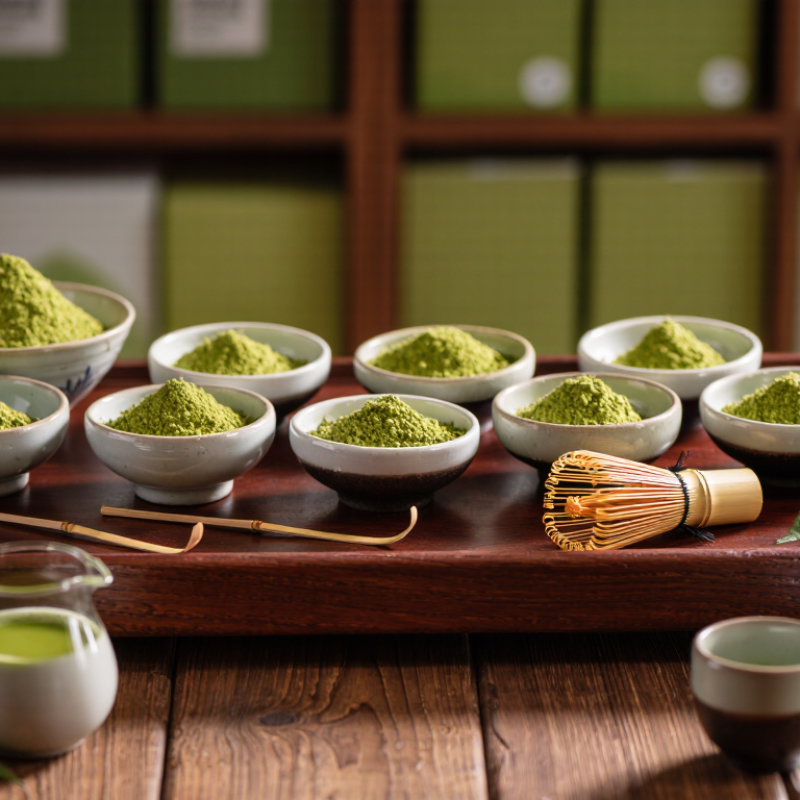
What Defines Ceremonial Matcha in China
In China, “ceremonial matcha” is usually a quality description, not a universally regulated grade. The phrase suggests powder intended for drinking on its own, where aroma, texture, and balance matter. A reliable assessment looks beyond the label. It considers leaf material, cultivation, processing, and storage.
Tea leaves may be shaded before harvest, then steamed, dried, and finely milled. Careful processing helps preserve a fresh, vegetal aroma and a smooth texture. Color alone misleads. A vivid green shade can be attractive, but it cannot prove freshness or good flavor. This distinction is not always tidy, since growing conditions and production choices vary among Chinese tea regions.
In the bowl, quality matcha should whisk into a fine, even foam, with little grit on the tongue. Its taste may be grassy and gently sweet, with bitterness that stays controlled rather than harsh. Freshness matters. Ask when the powder was milled, how it was packed, and whether it has been protected from light, heat, and moisture. These details are useful, though no checklist replaces tasting. Even experienced buyers can disagree about what “ceremonial” should mean.
How China’s Ceremonial Matcha Manufacturers Are Evaluated
Evaluating China’s ceremonial matcha manufacturers starts with a caveat: “ceremonial grade” has no universally harmonized definition. Buyers should therefore examine evidence, not labels. Request batch-level records showing tea-leaf origin, cultivar, harvest period, shading practice, and milling method. Fine, vivid green powder and a fresh, grassy aroma are useful sensory clues, but neither proves quality alone.
Grand View Research estimated the global matcha market at USD 3.5 billion in 2023 and projected a 7.9% compound annual growth rate from 2024 to 2030. This market estimate signals rising demand, not product quality. For a more grounded comparison, assess color consistency, particle fineness, aroma, bitterness, and performance in a simple whisked-water tasting. Ask for recent, batch-specific laboratory results covering relevant contaminants and product specifications. ISO 11287:2011 provides a reference for green tea’s definition and basic requirements; it does not certify a ceremonial matcha grade.
Factory audits can help verify cleanliness, storage conditions, and traceability from leaf to packed powder. Look for sealed, light-protective packaging and clear production dates. One imperfect point: supplier paperwork may be complete while sensory results vary between batches. Retesting matters. Sources: Grand View Research, Matcha Market Size, Share & Trends Analysis; ISO 11287:2011.
China’s Ceremonial Matcha Manufacturers: How They Are Evaluated
Evaluation criteria and suggested weighting for comparing manufacturers—not company scores or an official industry standard.
The framework prioritizes leaf origin and traceability, then assesses processing, food safety, sensory quality, and documentation. Verify each criterion against batch records, facility information, and independent test reports; “ceremonial” is not a universally regulated grade.
Profiles of China’s Top 10 Ceremonial Matcha Manufacturers
Profiles of China’s Top 10 Ceremonial Matcha Manufacturers should compare verifiable production practices, not polished claims. “Ceremonial” has no universally accepted grade standard, so buyers should check leaf origin, shading period, harvest season, milling method, and sensory records. A vivid green color is not enough. Request batch-level test results, including particle size and moisture.
The market is growing. Grand View Research estimated the global matcha market at USD 3.8 billion in 2023 and forecast a 7.4% compound annual growth rate from 2024 to 2030. This wider market figure does not prove any individual Chinese supplier’s quality. The profiles should therefore distinguish manufacturers by traceable sourcing, processing controls, and consistency between sample and repeat orders.
Look for practical details: whether leaves are cooled before milling, how powder is protected from light and humidity, and whether production lots can be traced to harvest areas. Ask how suppliers handle color and flavor variation across seasons. Some profiles may offer limited public evidence; that gap matters. A careful comparison should say so, rather than treating marketing language as proof.
China Top 10 Ceremonial Matcha Manufacturers — Regional Profiles
Accuracy note: This is a non-ranked overview of ten Chinese tea-producing regions, not a verified list of ten manufacturers. Company-level identities, ceremonial-matcha output, certifications, and capacities are not included because they cannot be established from regional tea facts alone. “Ceremonial” is not a universally standardized grade; buyers should verify shade-growing, processing, milling, and food-safety documentation directly with suppliers.
Tea Origins, Production Methods, and Quality Standards
China’s ceremonial matcha begins with tea gardens where cultivar, altitude, rainfall, and harvest timing shape the leaf. Zhejiang and Guizhou are among the regions associated with Chinese matcha production, though local conditions differ. Before harvest, growers may shade tea plants to encourage softer leaves and a greener cup. The practice requires careful timing. Too much shade can weaken leaf growth, while too little may affect color and flavor. Origin matters, but it is not a quality guarantee.
After picking, leaves are steamed to limit oxidation, then dried and sorted to remove stems and veins. The prepared leaf material is milled into fine powder, using equipment and settings that affect heat, texture, and aroma. Good powder should look vivid green, feel smooth between the fingers, and smell fresh rather than stale or grassy in an unpleasant way. Small clumps can appear, so a sieve is useful before whisking. It is a simple check.
Quality review should also include moisture control, particle-size consistency, and appropriate testing for contaminants and pesticide residues. Buyers can ask for harvest details, processing records, and current laboratory documentation. Still, a certificate cannot describe every cup. Taste varies with water temperature, storage, and preparation, and even careful producers may face seasonal differences. That variability deserves honest attention.
How to Compare Chinese Matcha Manufacturers and Suppliers
When comparing Chinese ceremonial matcha manufacturers, look beyond color and price; consistent processing matters more. Ask how leaves are shaded, steamed, dried, and milled, and whether each step is documented by lot. The term “ceremonial” is not applied uniformly, so ask about intended use and sensory specifications. Fine powder should feel silky between your fingers, with a fresh green aroma rather than hay or damp cardboard. Taste it plain. Gentle bitterness and lingering sweetness can be useful clues, though personal preference still matters.
Request recent test reports and check what they cover, including pesticide residues, moisture, and microbiological limits. Confirm that results match the batch being offered, not a sample from another harvest. Ask for harvest dates, storage conditions, packaging details, and the basis for the stated shelf life. Small details count. A supplier may respond quickly but provide vague records. Treat that gap as a reason to ask again, not proof of poor quality.
Compare trial samples using the same water temperature and powder dose; otherwise, brewing differences may affect your judgment. Discuss minimum order quantities, lead times, and how seasonal shortages or color variation are handled. A vivid green shade alone cannot establish freshness or quality. Ask for traceability, and keep a sealed sample for later comparison.
